
Vacuum Heat Treatment for Consistent Knife Performance
Controlled Heat Treatment. Reliable Blade Performance.
Consistent blade performance begins with controlled heat treatment. HONWAY emphasizes appropriate process settings and hardness verification to support the required balance of hardness, durability, and performance across production batches.
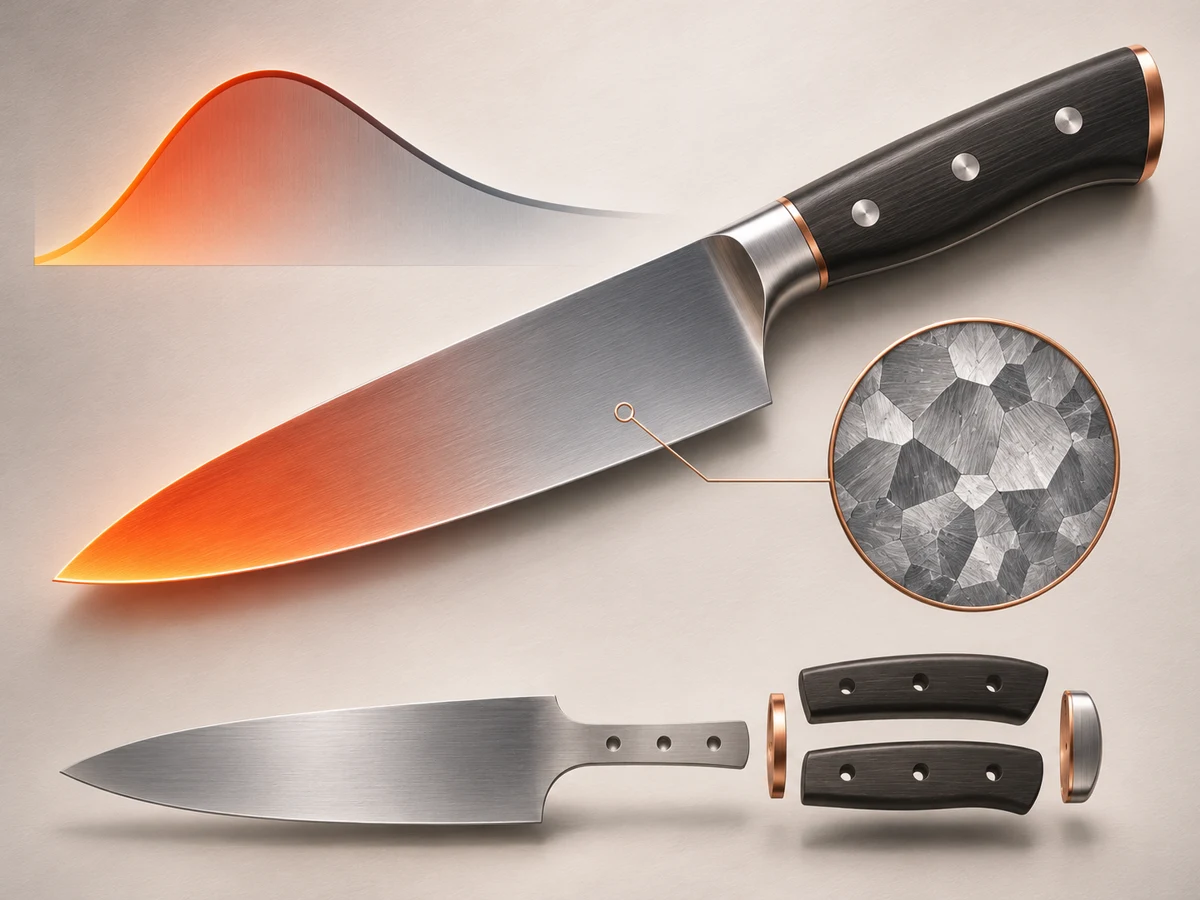
Why Heat Treatment Matters
Heat treatment influences the microstructure and mechanical properties of blade steel. Appropriate processing helps achieve the intended material performance while considering hardness, toughness, wear resistance, and the risk of blade damage.
The objective is to meet the product specification with a process suitable for the selected steel. Hardness is one part of that evaluation, alongside geometry, construction and intended use. A treatment description should therefore identify its application and verification method instead of promising the same result for every blade.
Understanding the Heat Treatment Process
The applicable route and sequence must be defined for the blade material and product. The following overview explains the role of each stage; actual settings, equipment and any additional treatments require project-specific confirmation.
Preparation
Confirm material identity, blade condition and the applicable processing requirements. Loading and preparation should suit the approved route.
Controlled Heating
Use the heating conditions defined for the steel and product. The relevant operating records should identify the approved process rather than a generic temperature claim.
Quenching
Apply the cooling stage specified for the material and processing route. The method should be reviewed together with the required blade properties and distortion considerations.
Tempering
Apply the tempering conditions appropriate to the approved route. Neither the number of cycles nor the settings should be assumed to be identical for all products.
Hardness Verification
Evaluate hardness against the product specification using an appropriate method and sample preparation. Review any result outside the acceptance requirements before release.

Heat Treatment Process Control
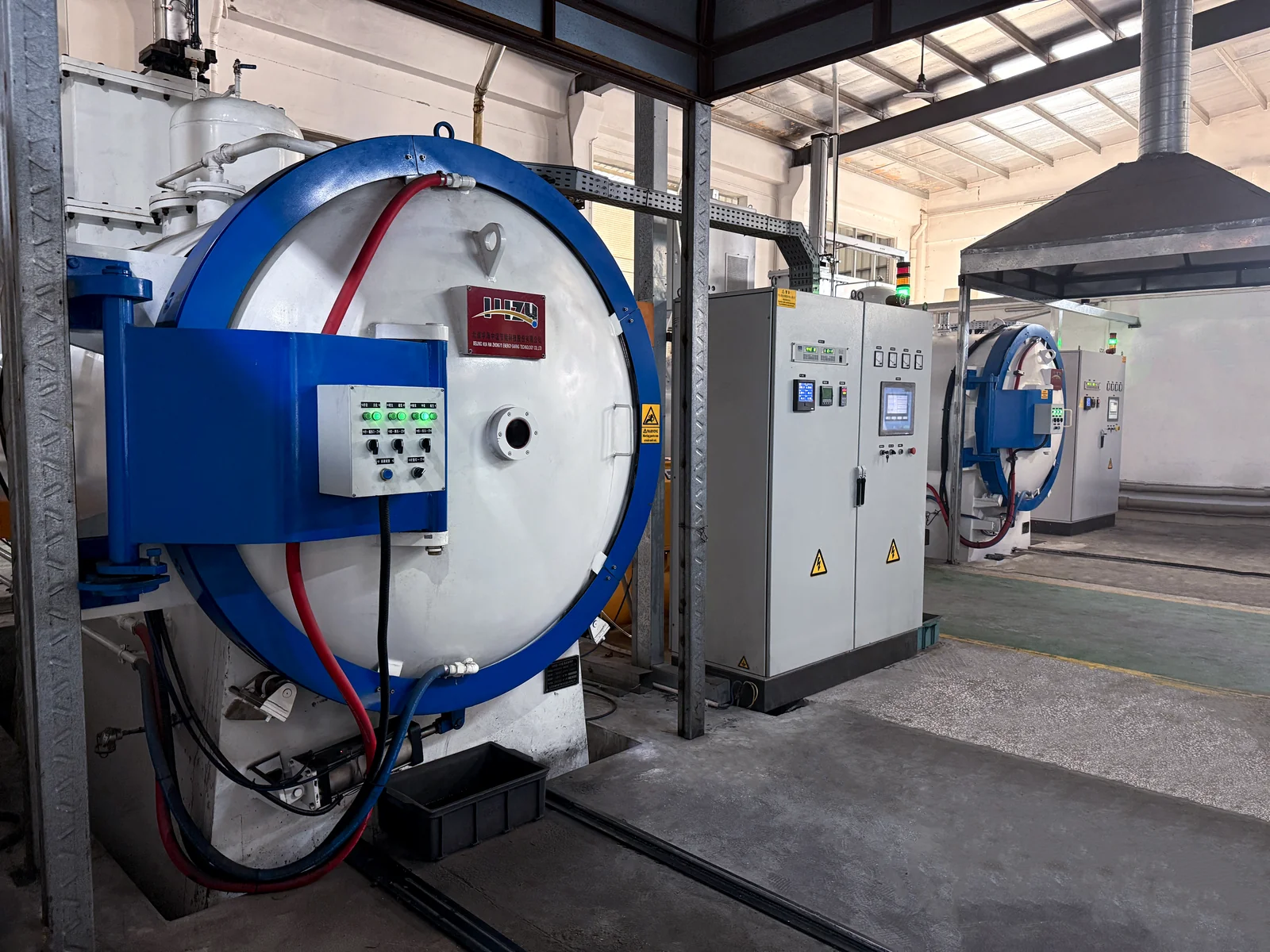
Process consistency requires suitable equipment, defined operating parameters, production records, and appropriate verification methods. These controls support manufacturing decisions and help identify potential variation between batches.
For a sourcing review, ask how the applicable process is identified, which records are retained and how deviations are assessed. The useful evidence is the connection between the material, processing requirements and verification results. Equipment photographs alone do not demonstrate that a particular cycle was used for an order.

Hardness Testing & Batch Consistency
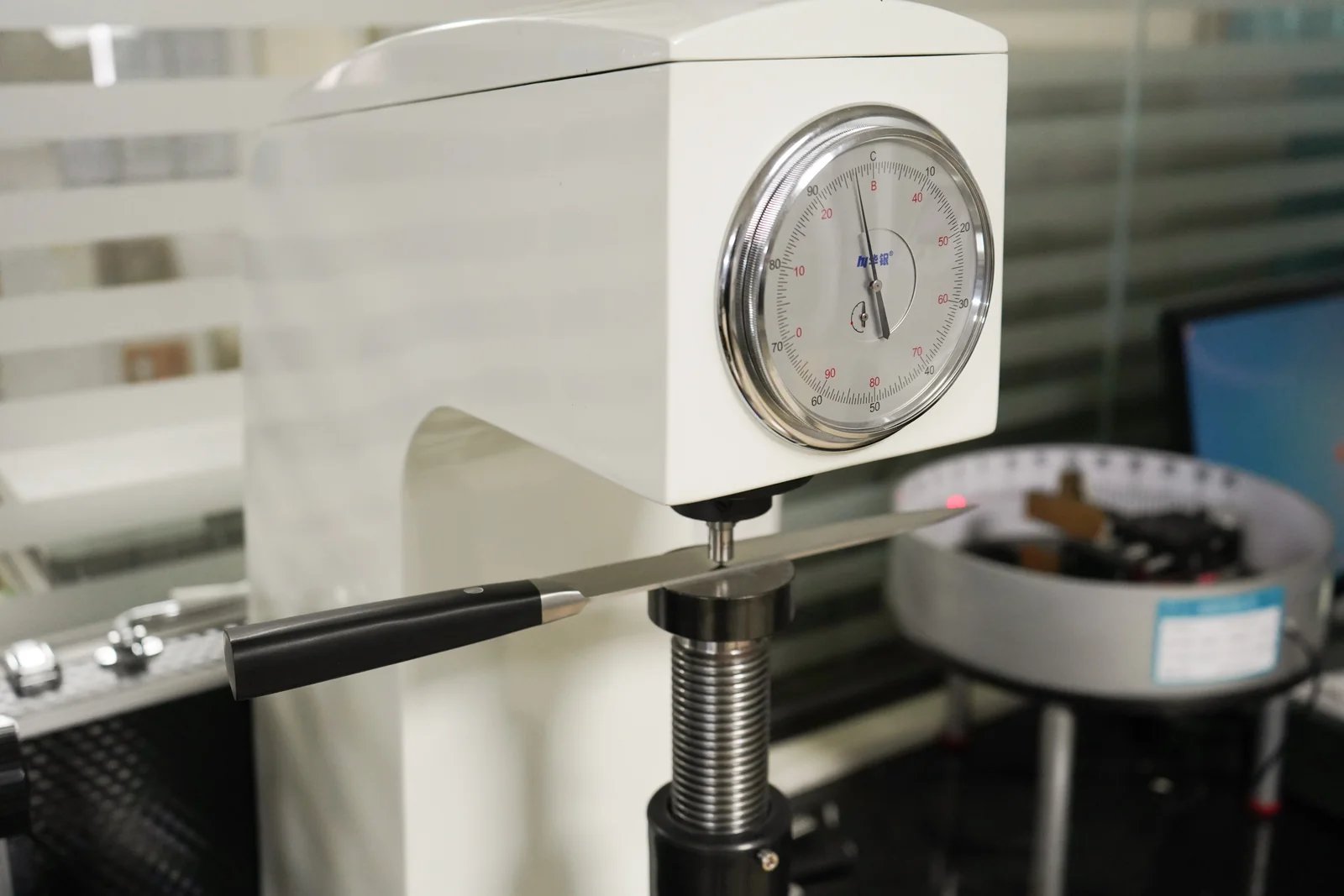
Hardness testing helps verify whether processed blades meet their approved product specifications. The appropriate hardness range depends on steel type, product design, intended application, and customer requirements.
A hardness value is meaningful only with the method, preparation and acceptance range understood. Where HRC is specified, confirm that the test arrangement is suitable for the blade and the agreed evaluation. Hardness results should be considered with the other requirements of the finished knife.
Supporting Repeatable Production Results
Defined specifications and suitable verification help buyers manage production risk. They create a reference for assessing whether a batch meets the intended requirements and for investigating variation. Agree on the verification scope and documentation before production so repeat orders can be evaluated on a consistent basis.

Related Capabilities
Frequently Asked Questions
Why is heat treatment important for kitchen knives?
Heat treatment influences the mechanical properties of blade steel. The applicable route should support the intended balance of hardness, durability and performance for the product, rather than pursue one value in isolation.
Does every steel require the same heat treatment?
No. The appropriate route depends on the steel, blade construction and product requirements. Heating, cooling and tempering arrangements must be specified for the application.
How is blade hardness checked?
Hardness is checked using an appropriate test method and preparation, then compared with the approved specification. The method, sampling arrangement and reporting scope should be confirmed for the project.
Does higher hardness always mean better performance?
No. Hardness is only one factor. Intended use, blade geometry, toughness and maintenance requirements also matter when evaluating the knife as a complete product.
How can heat treatment influence batch consistency?
An approved process and suitable verification provide a common basis for reviewing batches. Records can help identify deviations, but the actual controls and available documentation should be confirmed for the order.
Build Your Product on Controlled Manufacturing
Discuss your blade material, product construction and verification requirements. Confirm the applicable processing route before making performance commitments.