Damascus Knife Patterns Explained: A Guide to Different Blade Designs
A Damascus kitchen knife is often recognized before it is even picked up.
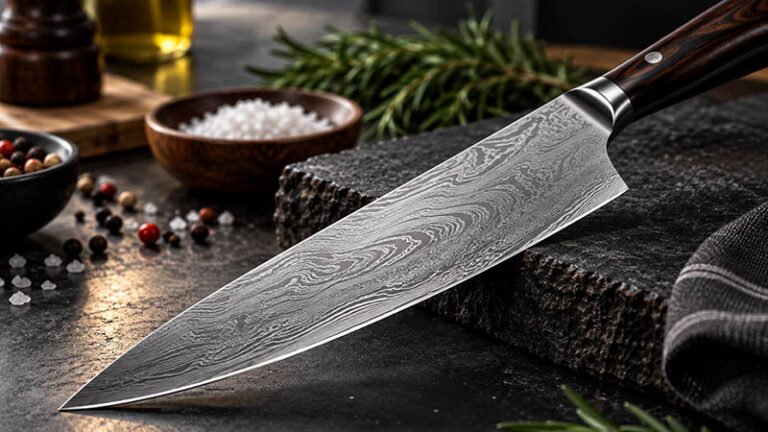
The flowing lines, layered textures, and distinctive patterns across the blade can give a knife a highly recognizable appearance.
But not all Damascus blade patterns look the same.
Depending on the manufacturing process and design approach, Damascus blades can feature different visual patterns — from flowing waves and feather-like lines to snowflake, lightning, and serrated patterns.
For kitchen knife brands, understanding these patterns can help when developing a collection with a distinctive visual identity.
What Is a Damascus Blade Pattern?
A Damascus blade pattern refers to the visible pattern created within or on the surface of a Damascus-style blade.
The pattern is not simply printed onto the blade.
It is created through the arrangement and processing of different layers or structures within the blade material, followed by finishing processes that reveal the visual contrast.
The final appearance can vary significantly depending on the construction, pattern design, finishing method, and whether a steel core is used.
This means that Damascus is not one single pattern.
It is a family of different visual styles.
1. Beach Pattern
The Beach Pattern has flowing, relatively soft lines that resemble the movement of waves across a surface.
Its visual character is more organic and understated than highly geometric patterns.
For kitchen knife collections, this type of pattern can work well when the brand wants to communicate:
- Natural aesthetics
- Handcrafted character
- Elegance
- A refined premium appearance
The flowing pattern can make each blade visually distinctive while maintaining a relatively clean overall appearance.
2. Feather Pattern
The Feather Pattern creates a more structured and directional visual effect.
As the name suggests, the pattern can resemble the shape and symmetry of a feather, with lines developing outward from a central structure.
Compared with a simple flowing pattern, feather-style Damascus can create a stronger sense of craftsmanship and visual complexity.
It is particularly suitable for premium kitchen knives where the blade itself is intended to become an important part of the product’s visual identity.
3. Snowflake Pattern
The Snowflake Pattern is one of the more recognizable Damascus blade patterns.
Instead of long continuous lines, the pattern creates repeated shapes across the blade surface, producing a texture that can resemble snowflakes.
This gives the blade a more intricate and decorative appearance.
For premium knife collections, snowflake patterns can be used when the product needs a strong visual statement without relying heavily on additional decoration.
4. Lightning Pattern
The Lightning Pattern creates a more dynamic visual effect.
Its lines have a sharper, more energetic appearance, giving the blade a sense of movement.
Compared with softer wave-like patterns, lightning-style patterns can create a more contemporary and technical aesthetic.
This can be particularly interesting for brands looking to combine traditional Damascus craftsmanship with a modern product design language.
5. Serrated Pattern
The Serrated Pattern uses a more repetitive and structured visual arrangement.
Its relatively regular lines create a strong sense of rhythm across the blade.
This pattern can be useful when a brand wants the Damascus blade to have a more engineered or geometric appearance rather than a completely organic one.
6. Snowflake Pattern With Blackening Process
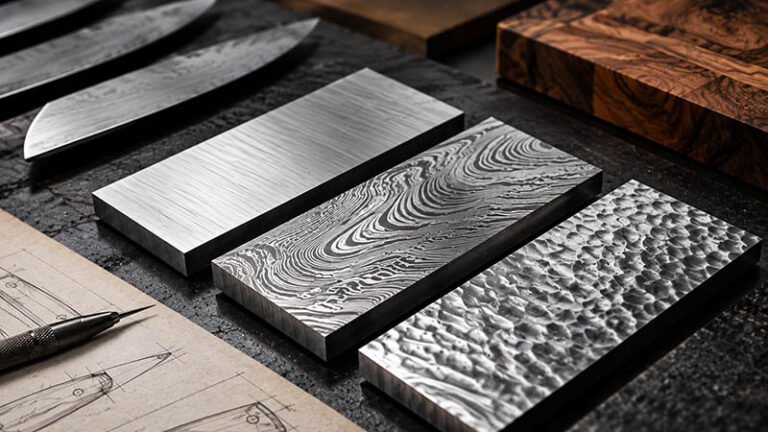
The image also shows a Snowflake Pattern with Blackening Process.
In this approach, the snowflake pattern is combined with a darker surface treatment to increase visual contrast.
The result is a more dramatic appearance compared with a conventional light Damascus finish.
Dark-and-light contrast can make the pattern easier to see and can also give a knife a more contemporary premium aesthetic.
For brands developing a collection, this type of finish provides another opportunity to differentiate the product without changing the basic blade silhouette.
7. Half Hammered Pattern
A Half Hammered Pattern combines Damascus patterning with a hammered surface treatment.
The hammered texture creates additional visual depth across the blade.
This means the appearance of the finished knife is influenced not only by the Damascus pattern itself, but also by the surface texture.
The combination can create a more handcrafted and tactile visual character.
8. Half Hammered Pattern Without Steel Core
The image also shows a Half Hammered Pattern Without Steel Core.
This is an important distinction when discussing Damascus knife construction.
Not every Damascus-style blade uses the same internal construction.
Some designs incorporate a steel core, while other constructions can use patterned material without a separate core.
For brands, understanding this difference is important because the visible Damascus pattern does not by itself tell the complete story of the blade’s construction or performance.
Does the Damascus Pattern Affect Cutting Performance?
This is one of the most common questions about Damascus kitchen knives.
The short answer is:
The visible pattern itself does not automatically determine how well a knife cuts.
Cutting performance depends on a combination of factors, including:
- Blade material
- Steel composition
- Heat treatment
- Blade geometry
- Edge geometry
- Grinding
- Sharpening
- Overall construction
The Damascus pattern is primarily a visual characteristic of the blade construction and finishing.
A beautiful Damascus pattern does not automatically mean that the knife will have better edge retention or greater sharpness.
This distinction is important for brands developing premium kitchen knives.
Damascus Pattern vs. Knife Performance
When evaluating a Damascus kitchen knife, it is useful to separate two questions:
How does the knife look?
This is where Damascus pattern design can have a major impact.
The pattern can influence:
- Visual identity
- Perceived craftsmanship
- Product differentiation
- Premium positioning
- Collection aesthetics
How does the knife perform?
This depends on the engineering and manufacturing behind the blade.
Factors such as material selection, heat treatment, geometry, grinding, and sharpening are much more directly connected to performance.
A successful premium knife therefore needs both:
Visual Design + Material & Manufacturing Performance
Why Pattern Selection Matters for Brands
For a kitchen knife brand, choosing a Damascus pattern is not simply a technical decision.
It is also a branding decision.
Different patterns communicate different visual messages.
| Pattern | Visual Character | Suitable Product Direction |
| Beach Pattern | Flowing, natural | Elegant premium collections |
| Feather Pattern | Structured, artistic | Craftsmanship-focused collections |
| Snowflake Pattern | Intricate, decorative | Premium gift and retail collections |
| Lightning Pattern | Dynamic, modern | Contemporary collections |
| Serrated Pattern | Repetitive, geometric | Technical / modern designs |
| Snowflake + Blackening | High contrast, dramatic | Premium modern collections |
| Half Hammered | Textured, handcrafted | Artisan-inspired collections |
The final choice should depend on the brand’s target customer, product positioning, handle design, packaging, and overall visual language.
Choosing the Right Damascus Pattern
When developing a Damascus kitchen knife, brands can consider several questions:
1. What is the target market?
A premium culinary brand may have different requirements from a mass-market kitchenware brand.
2. What is the desired visual identity?
Should the collection feel traditional, handcrafted, modern, technical, or luxurious?
3. What handle design will be used?
The blade pattern should work together with the handle material, color, and shape.
4. What is the product positioning?
The pattern, finishing, packaging, and overall product presentation should support the intended price and market position.
5. What blade construction is appropriate?
The visible pattern is only one part of the product. The underlying material and construction also need to meet the intended performance requirements.
Damascus Is More Than a Pattern
A Damascus kitchen knife is not defined by its pattern alone.
Behind the visual appearance are decisions about material selection, blade construction, heat treatment, grinding, finishing, sharpening, and quality control.
The pattern creates the first impression.
The engineering and manufacturing determine what happens after the knife reaches the customer’s kitchen.
At HONWAY, we see Damascus development as a combination of material understanding, product design, manufacturing capability, and brand positioning.
The right pattern should not simply make a knife look different.
It should help create a product that fits the brand, the market, and the customer.
A distinctive blade catches attention. Thoughtful engineering earns trust.